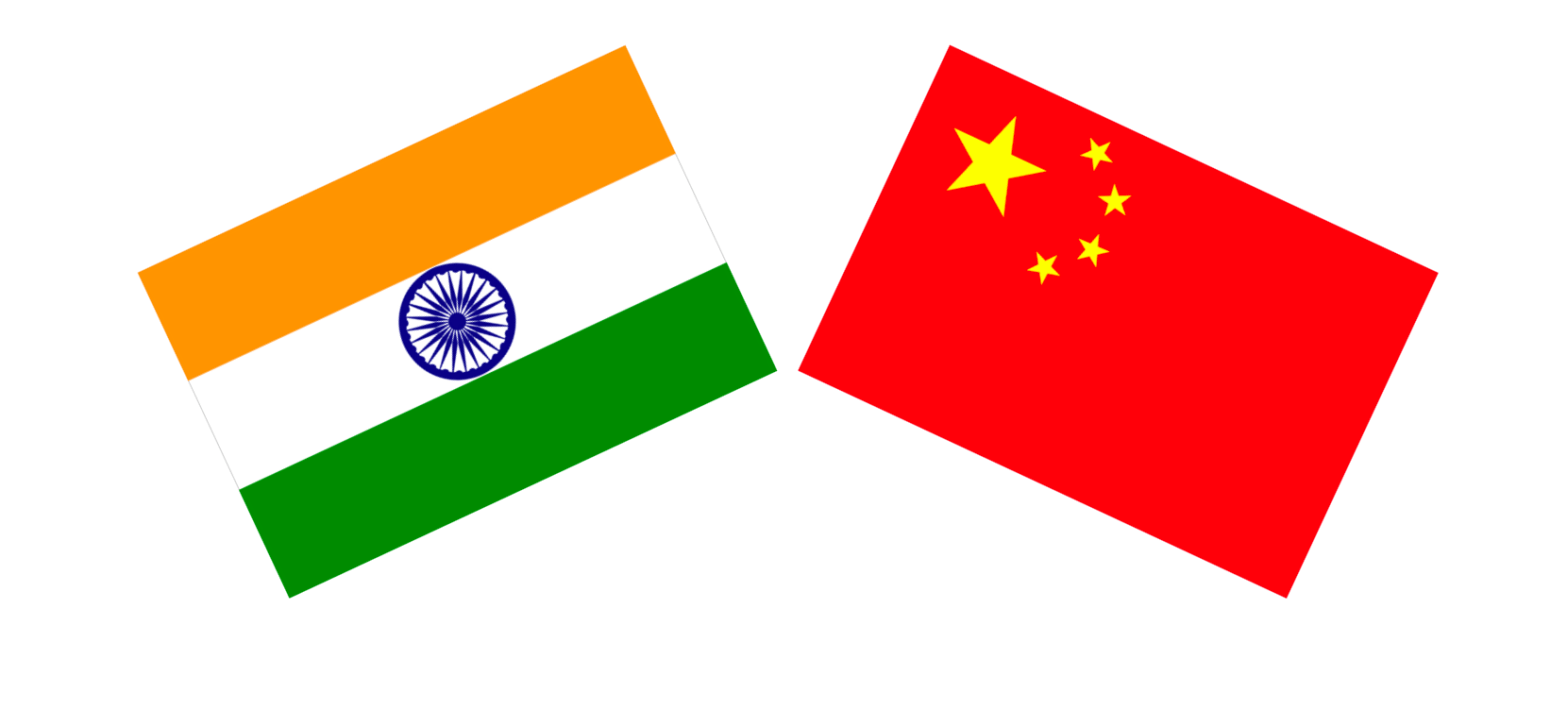
The rise of China has broken many myths created and sustained by western power since industrial revolution. What China has achieved in last four decades is nothing sort of miracle in the recorded human history. The outcome worth considering is rise of a power and a model at the opposite end of the spectrum compared to the West. Skeptics often propound Chinese model as non-replicable and susceptible to collapse due to internal fault-lines. In our worldview, that remains secondary as each state faces certain existential crisis nonetheless stability and longevity is always desirable. In terms of geoeconomics and geopolitics, China is aggressive both in neighborhood and beyond raising cost and challenges for India.
The modest rise of India in comparison to China during the same period has been explained and discussed ad nauseum1. But there was always a mixed feelings about India oscillating between extreme of collapsing to flourishing though mostly negative. Given the historical perspective and situation of other countries with similar background, India has achieved fair amount of success with a strong sense of aspirations driving the common life and economy especially after liberalization. The achievements appear even brighter in the backdrop of unique physical, ethnic, cultural and religious diversity of India creating multitudes of fault-lines. As India grows, she seeks to increase her sphere of influence where interaction and friction with expansionist China becomes a natural outcome2.
In India’s context, China has been an aggressor post world wars with a bitter memory of 1962 invasion. With newly acquired power, the expansionary and extractive nature of Chinese state only appears emboldened. Understanding this behavior becomes easy given the nature of state and antecedents. A stark reminder that majority of countries became free from the clutches of western power only after world wars. However, the true nature of freedom and autonomy may still remain debatable for majority of countries. The dominant role of the West in global affairs before and after world wars is central to human history in modern era. Going back to emergence of India and China from the shadows of colonialism and imperialism, their historical existence explains some of contemporary realities. The communist party ruled modern China is a successor state of imperial “middle kingdom” with an interregnum of civil war, foreign invasion and intervention. On the other hand, democratic and republic India is a successor state of exploitative and colonial British India.
The past may be behind us but never leaves us. In fact, past shapes, guides and transforms the future all the time. This is applicable more to civilizational states like India and China. The prevailing political dispensation in India has established the civilizational credentials of country though democratic and political engagements. The communist party in China has co-opted civilizational characters despite going against it in early years of their ascendence to power. A sense of continuity despite change of time makes India and China worth exploring for both academic and material interests. Acemoglu and Robinson in their recent book contrasts between two countries in terms of their institutional framework of state and society and their strength and relationship3. China has traditionally a strong state and weak society while historically India has strong society and weak state. The fast-changing world is breaking existing social structures and relations raising question about sustainability and direction of Indian society. At this juncture, the civilizational adhesives provide sustenance to materials progress. On the top of that, Indian state is gaining strength with modern technology reducing the cost of transaction and governance aided by political stability. However, it appears less problematic for China where state is consolidating further in the era of concentration4.
The modern technology has also lowered the natural barrier and thus buffer zone of Tibetan plateau is simmering with militarization. China has already leapfrogged India in many fields and most importantly in economic power. From manufacturing to innovation led growth, China is preparing for the future. Paraphrasing Mao, power flows through double barrel gun loaded with economic and military shots. Political ingenuity lies in optimizing the double barrel guns to one’s advantage. Having said that, we interpret current situation as increasing hostility between two countries due to collision of interests and power differential. The historical analyses of two countries suggests China following the path of arrogant imperial power while India broadly behaving as confederacy of states led by one among equals. In all possibilities, mutually beneficial trade will continue with caveats. At the same time, we believe that Chinese aggression towards India or the world will not cease in near future. In this scenario, India is better placed to benefit from excesses of belligerent China cunningly using debt and wolf diplomacy against weak and vulnerable countries. The political stability and sustained economic growth will help India not only in countering China but also to play significant role in the world.
References
- Each spoken or written word has a carbon footprint.
- Adding to Wagner’s law of expanding state, it is nature of the state to expand and thus extracts. Imperative to understand the limits to growth of the state in multistate setup.
- Acemoglu, Daron and Robinson, James (2019). The Narrow Corridor. States, Societies, and the Fate of Liberty, Penguin Publishers, New York.
- The era of concertation refers to concertation of power and wealth in early 21st century.
 पंचायत